
Core Elements of Federal Public Access Policies
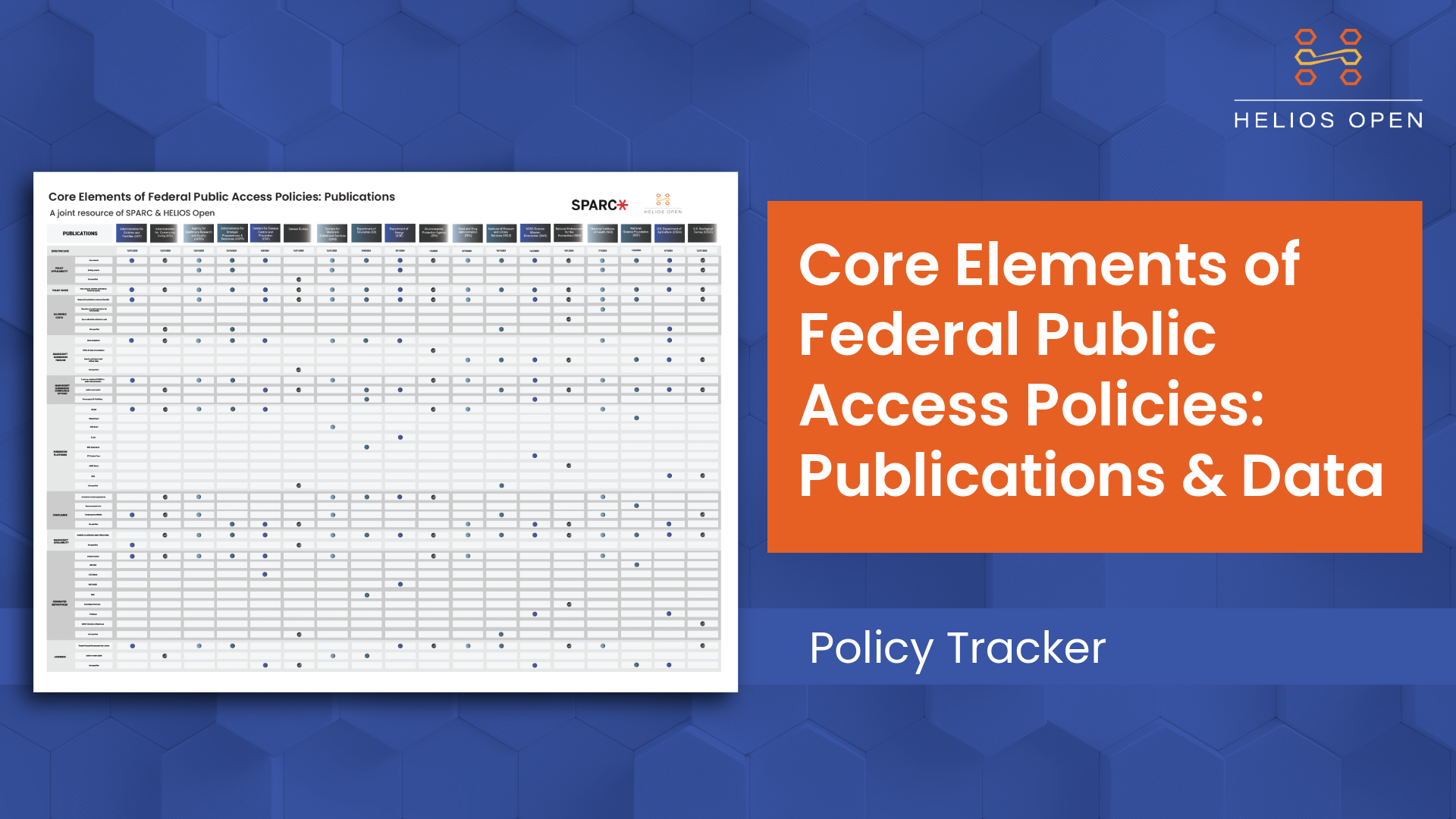
To support tracking, comparing, and understanding U.S. federal agencies public access requirements, SPARC and HELIOS Open have developed Core Elements of Federal Public Access Policies Resources to distill and enable users to easily compare key elements of federal agency public access policies.
Federal Purpose License
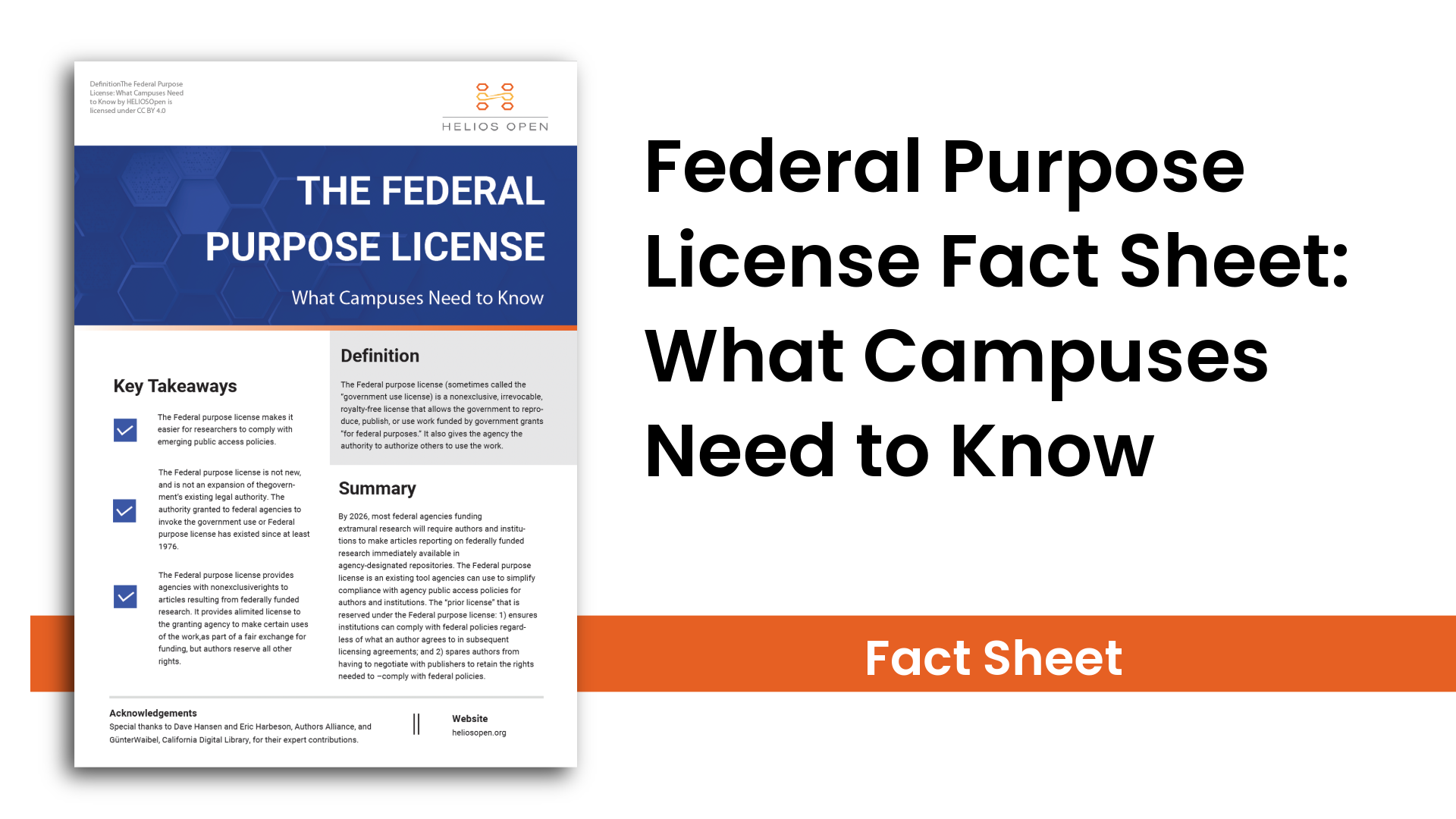
HELIOS Open created the “The Federal Purpose License: What Campuses Need to Know” fact sheet to support campuses navigating conversations about what the federal purpose license, or government use license, might mean for research reuse and public access compliance.
Implementing Data Evaluation at Institutions
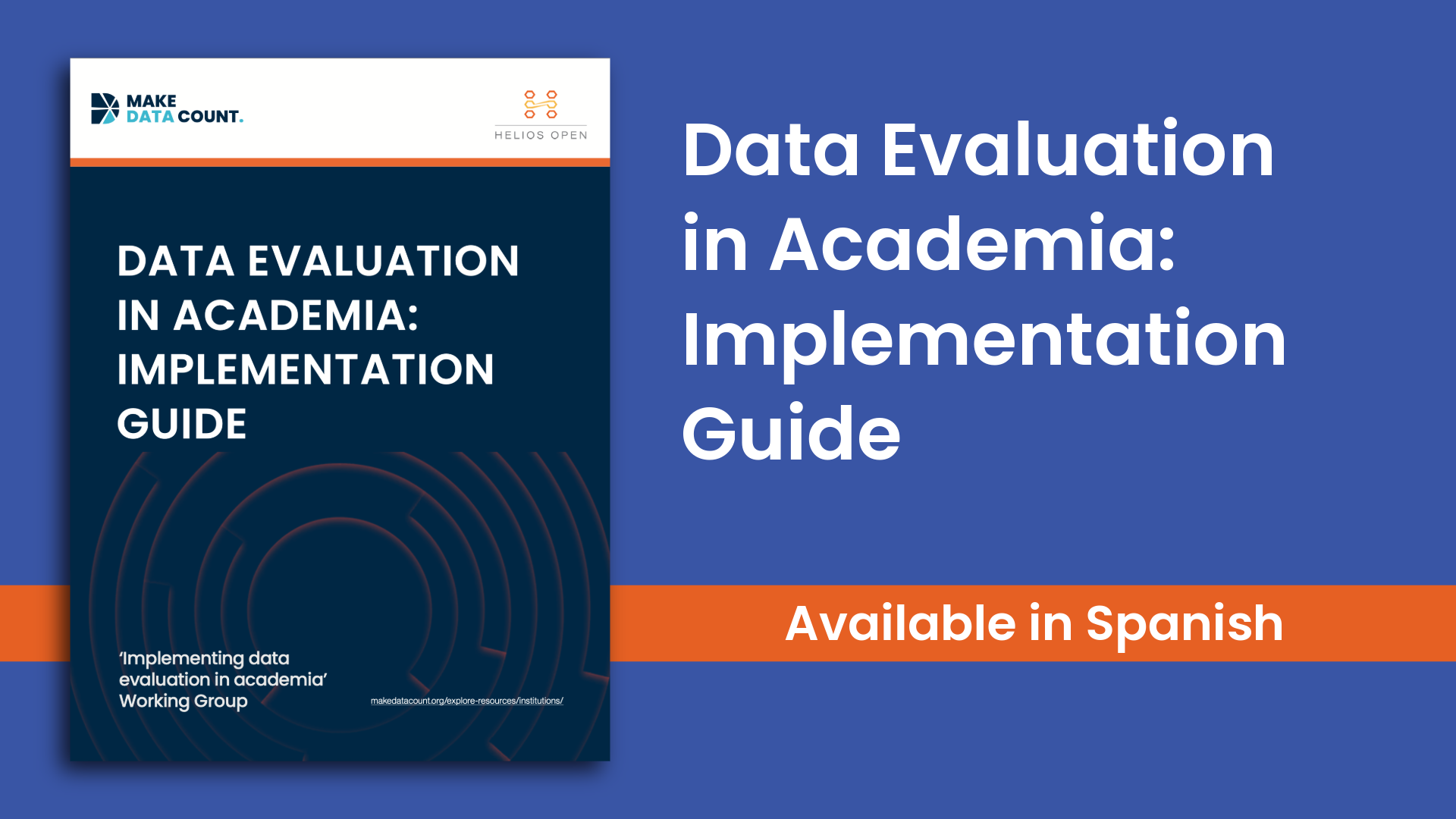
This guide provides practical guidance for integrating data and other open outputs in institutional review processes: ‘Data Evaluation in Academia: Implementation Guide’. DOI: 10.5281/zenodo.17293504
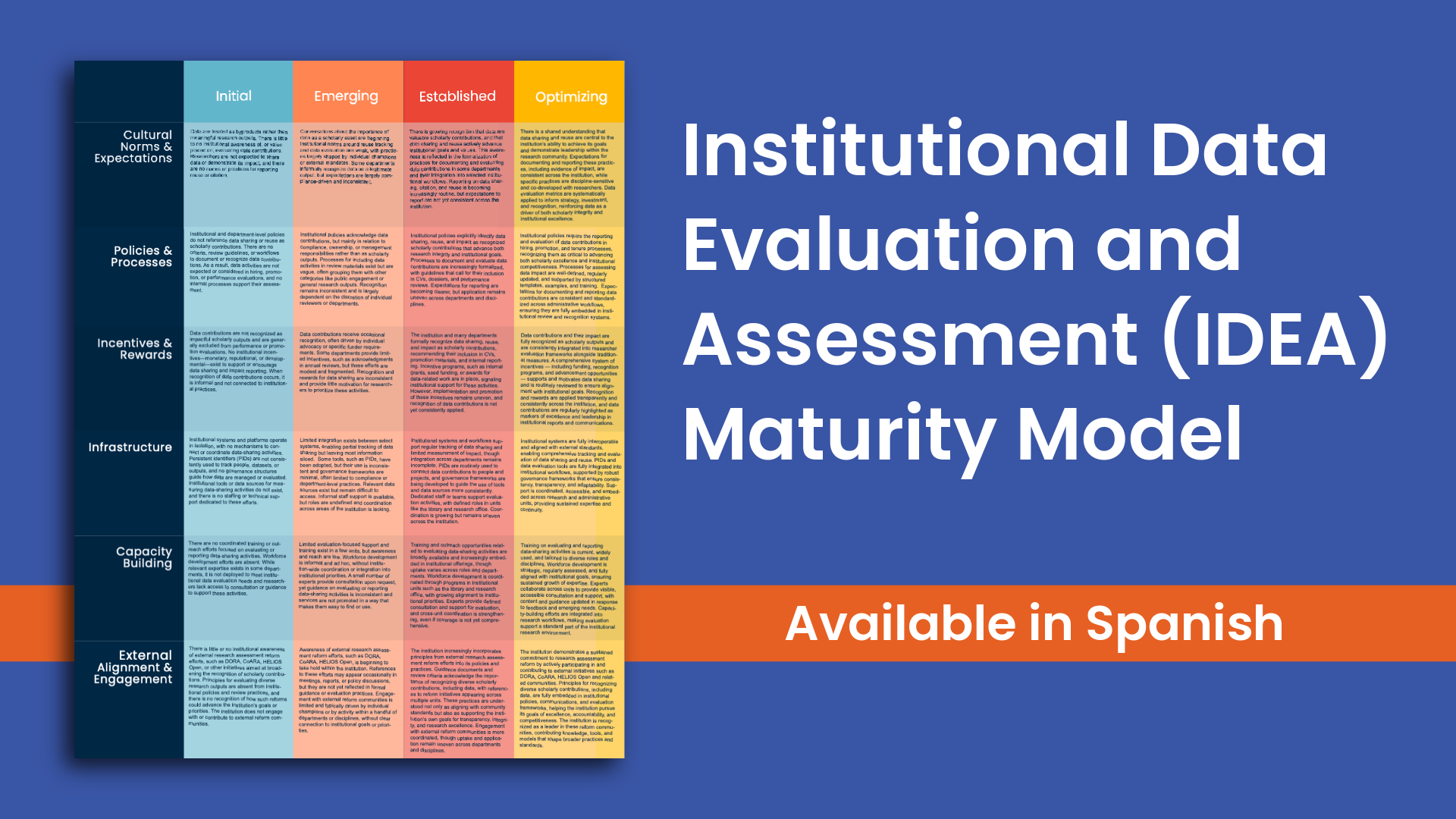
This guide assists research institutions assess their current practices and capacity for evaluating research data contributions. Whether institutions are at initial stages of their conversations about data evaluation, or more advanced in recognizing data contributions, the model helps institutions reflect on the dimensions relevant to data evaluation, assess their current approach in each of those areas, and identify opportunities for developing their practices and capacity for data evaluation.
DOI 10.5281/zenodo.17432837
-
![]()
Advancing responsible data use and recognition for data stewardship
A Case Study from Denise M. Scholtens - Professor of Biostatistics and Informatics, Feinberg School of Medicine, and Director of the Data Analysis and Coordinating Center (NUDACC) at Northwestern University.
-
![]()
Practical ways to incorporate data into tenure and promotion
A Case Study from Jeffrey Blume, Professor, School of Data Science, University of Virginia.
-
![]()
Advancing data sharing and evaluation at a research foundation
A Case Study from Vanessa Jorge, Fundação Oswaldo Cruz - FIOCRUZ, Brazil.
-
![]()
Building workflows for data publication and reuse
A Case Study from Patrick Charbonneau, Professor of Chemistry and Physics, Duke University.
-
![]()
Institutional processes that recognize data: opening up new pathways to promotion & tenure
A Case Study from Michael Dougherty, Department of Psychology, University of Maryland & HELIOS Open.
-
![]()
Initiating cultural change to expand evaluation criteria within institutions
A Case Study from Christian Blanco, Deputy Director for International Research, Pontifical Catholic University of Chile.



Members from this Working Group include: Kristi Holmes (Working Group Lead), John Chodacki (Working Group Lead), Iratxe Puebla, Devin Soper, Zach Chandler, John Borghi, Wind Cowles, Stephanie Lieggi, Jenny Muilenburg, Mara Blake, Anna Hatch, Daniel Umpierre, Jean-Baptiste Poline, Etienne Roesch, Johannes John-Langba, Robin Champieux, Brigitte Mathiak, Rachel Heyard, Benoît Grasser.
Institutional & Departmental Policy Language
The Institutional and Departmental Policy Working Group is developing strategies for engaging campus leaders in discussions around aligning hiring, reappointment, tenure, and promotion decisions with institutional values. Co-Leads: Chris Bourg, Director of Libraries at MIT; LaKeisha Harris, Dean, School of Graduate Studies and Research at University of Maryland Eastern Shore; Alzada Tipton, Provost at Whitman College.
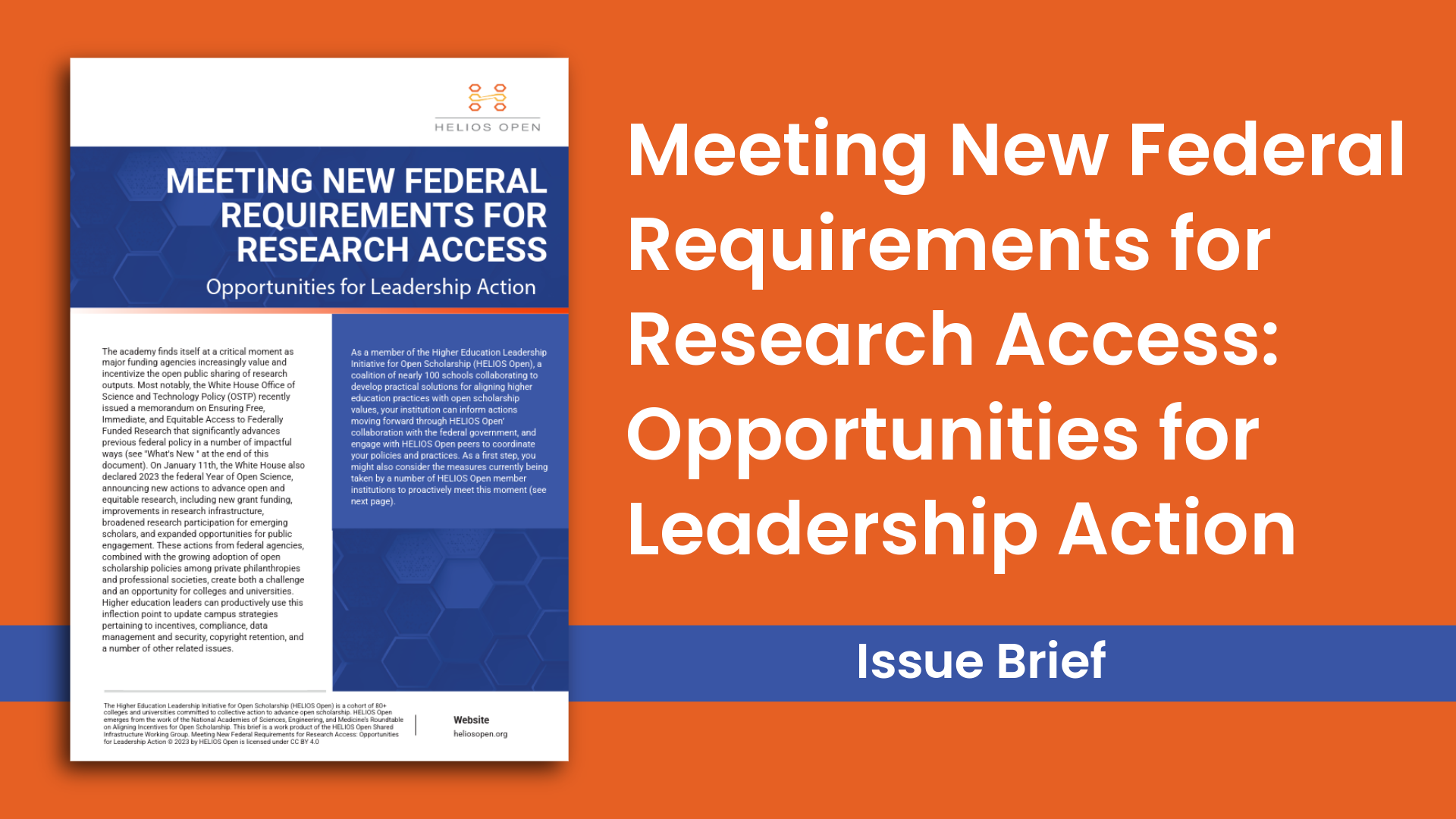
In January 2023, members of this working group contributed to an issue brief, disseminated to campus leadership, urging decision-makers to (1) stimulate further campus discussions on open scholarship; (2) begin surfacing core concerns and considerations about aligning with emerging federal directives; and (3) leverage the collective power of HELIOS Open to align higher ed and cross-sector strategies.
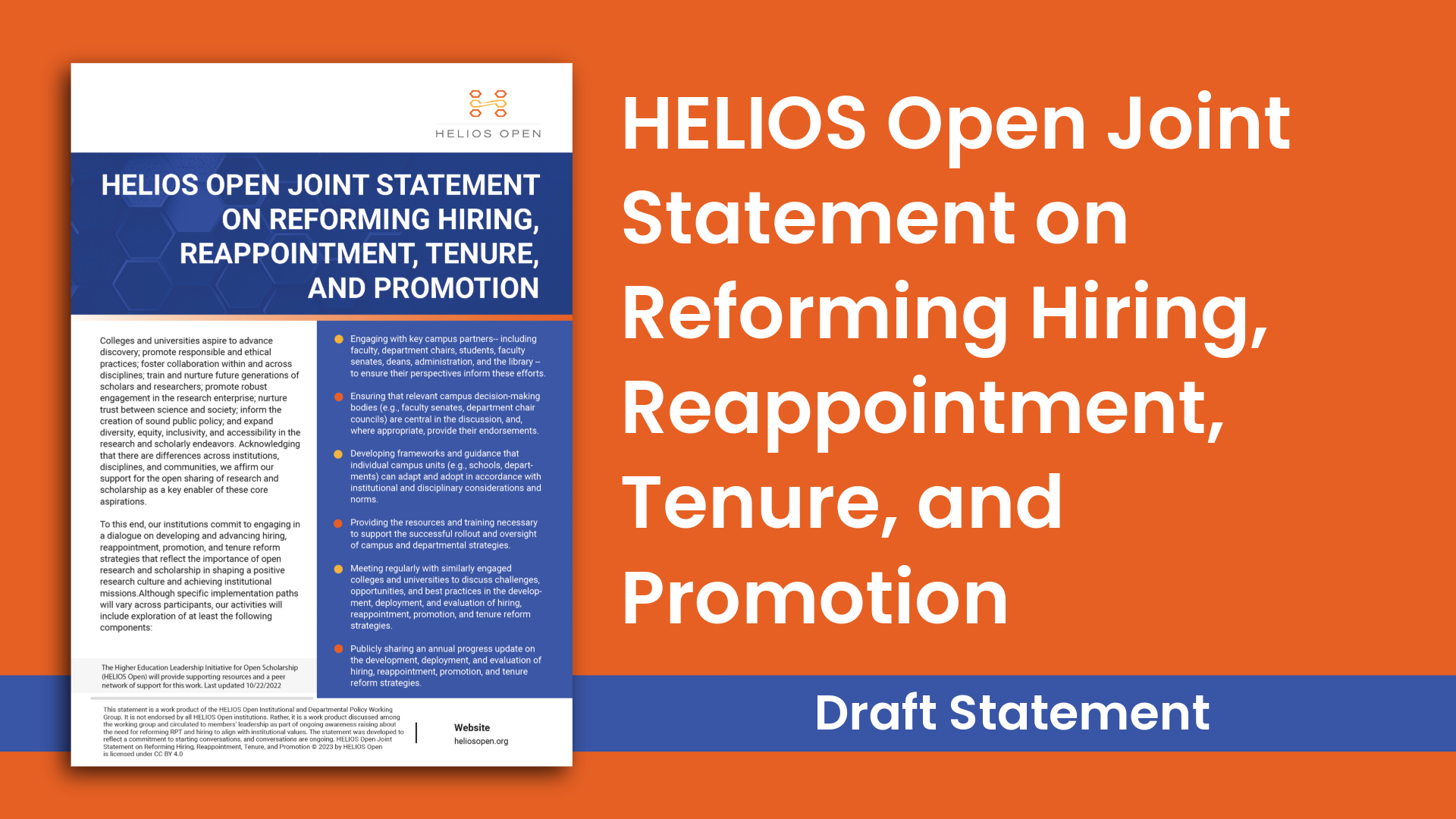
The Institutional and Departmental Policy Working Group is developing strategies for engaging campus leaders in discussions around aligning hiring, reappointment, tenure, and promotion decisions with institutional values. The group has drafted an RPT Joint Statement in support of this effort and socializing the statement among leaders. This statement is not endorsed by all HELIOS Open institutions, but a work product used for discussion during working group meetings and among campus partners.
Shared Open Infrastructure
Co-Leads for the Working Group that worked on these resources include: Cynthia Logsdon, Director of Research Academic Programs within the University of Louisville's Executive Vice President for Research; Mairéad Martin, CIO at the University of Illinois; Alicia Salaz, Vice Provost and University Librarian at the University of Oregon;
Former Lead: John Wilkin, Dean of Libraries at the University of Illinois (March 2022-November 2022.)
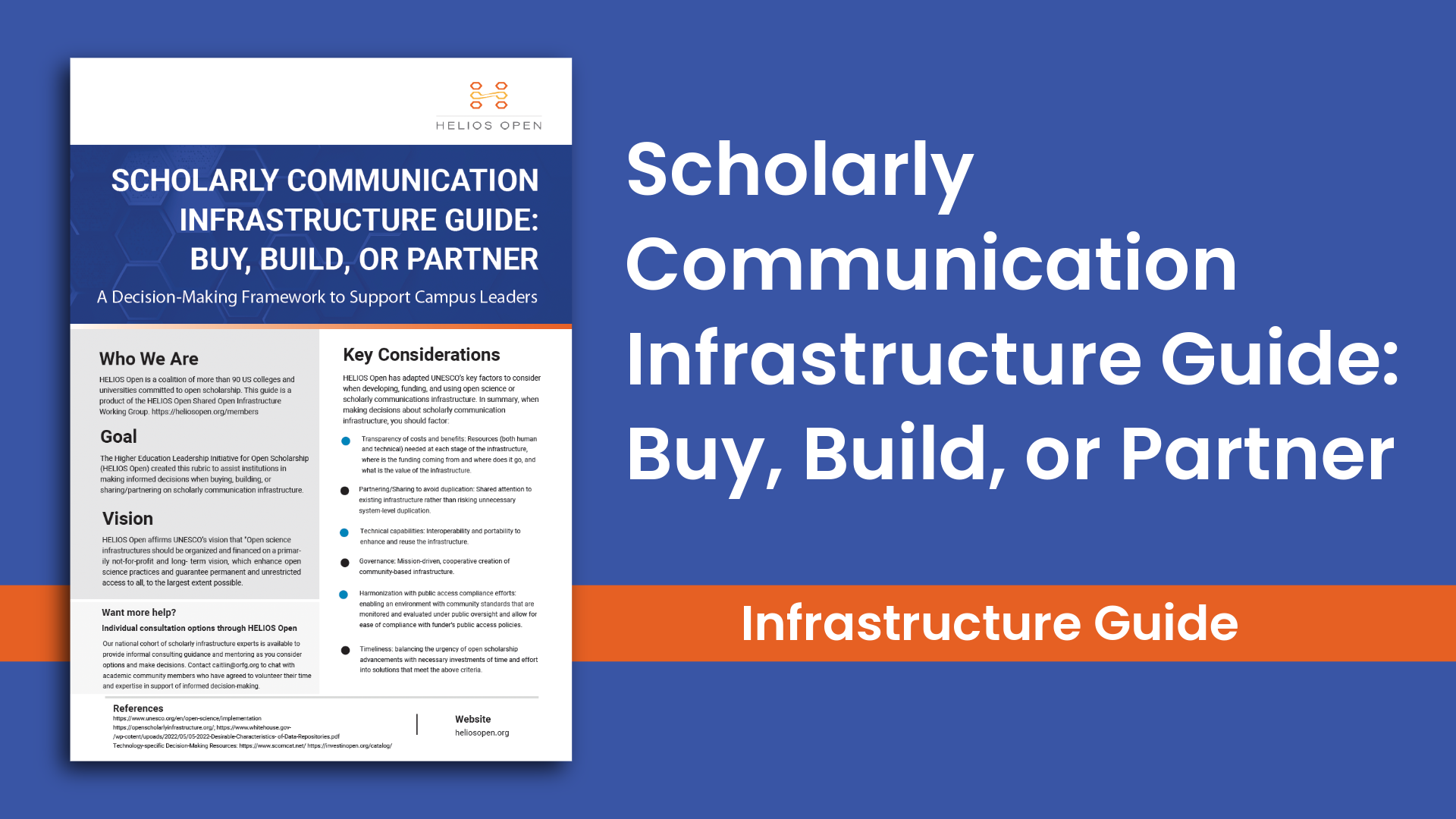
The Shared Open Infrastructure Working Group developed the “Scholarly Communication Infrastructure Guide: Buy, Build, or Partner” to support college and university leadership in making informed infrastructure decisions. The HELIOS Open working group recommends:
Packaging this alongside relevant HELIOS Open materials: “Issue Brief on Scholarly Communications Infrastructure” and the “Issue Brief on Meeting New Federal Requirements for Research Access: Opportunities for Leadership Action.”
Distributing this guidance to key campus decision-makers.
Convening a discussion with senior campus infrastructure decision-makers to discuss the institution’s current infrastructure status and needs.
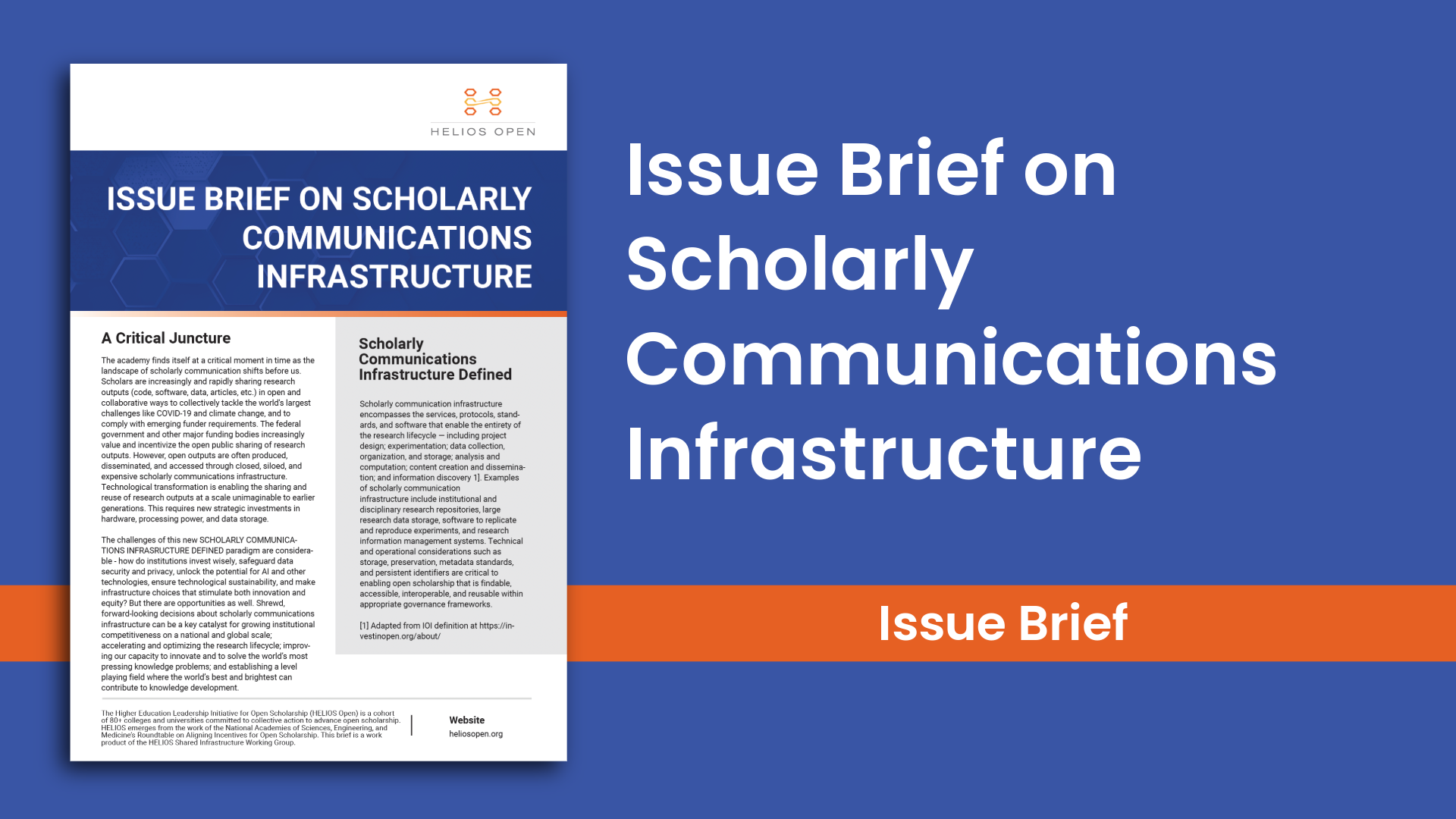
The Shared Open Infrastructure Working Group framed the importance of infrastructure as an enabler of a modern and efficient research ecosystem in this Issue Brief for institutional leaders.
The purpose of this document is to highlight partnership opportunities in open scholarly communications infrastructure. This brief was prepared for HELIOS Open members by Zach Chandler (Stanford), who asserts "we can realize a higher order of benefit to open scholarship if we engage in collective action, and explore partnerships and integrations."
This brief does not reflect the opinion of all HELIOS Open members, and active development of this work continues online in a separate V2 document, with additional co-authors and perspectives.
Good Practices in Open Scholarship
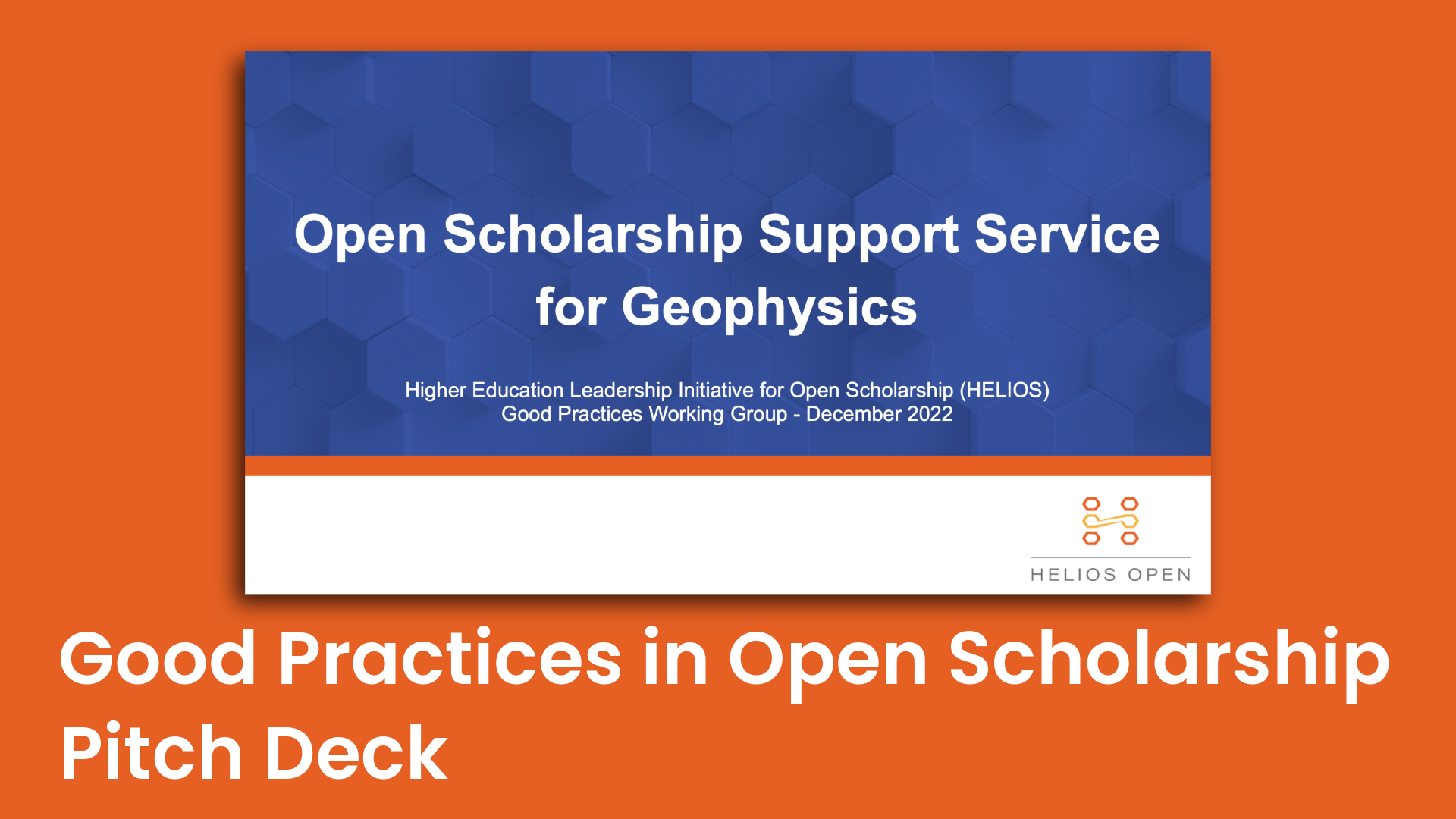
The Good Practices in Open Scholarship Working Group is developing a product specification and timeline for an open scholarship support service. The goal is to ensure “open” is easier for any researcher at any point of need, from tenured faculty to early career researcher. It is envisioned that the support service will grow with other sectors’ support (federal agencies, philanthropies, and societies and associations). The service aims to centralize existing campus support services for institutions that have them (libraries, grants and compliance office), support those that do not, and expand the network of support at the disciplinary level (i.e., link scholars to a network of disciplinary peers).
Next Steps:
Engage other sectors (professional societies, federal agencies) in discussions about what it might take to prototype a support service, with initial focus in a specific discipline.
Continue developing the vision, timeline, and features and functionality.
“We envision a network that helps any researcher engage in any open scholarship activity, at any point in the research lifecycle. This service will provide practical guidance on how to “do open” in ways that align with institutional, funder, and disciplinary norms/requirements.”
Co-Leads: Dustin Fife, College Librarian at Colorado College; Athena Jackson, Dean of Libraries at the University of Houston; and Stephen Jacobs, Director of Open@RIT at RIT
Cross-Sector Alignment
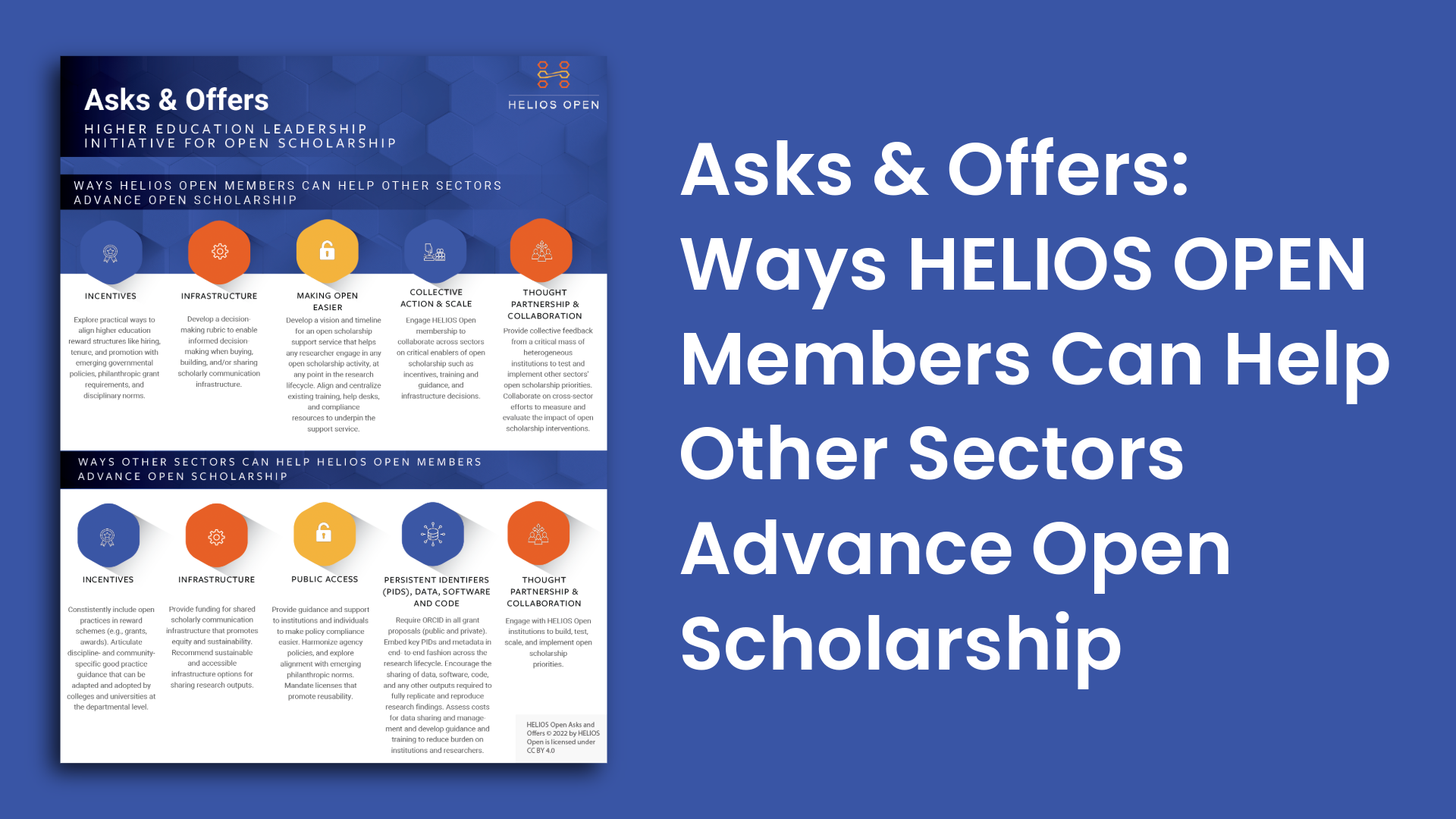
The Cross-Sector Alignment Working Group is working on a set of “offers” – what HELIOS Open members, and the higher education community more generally, can bring to the cross-sector conversation to catalyze open scholarship, and “asks” – what is needed from other groups (funders, societies, government agencies, etc.) to optimize and scale these efforts. Informed by the work of the other HELIOS Open working groups, this team will focus on effectively engaging with complementary sectors to develop, harmonize, and scale (a) open scholarship incentives within and beyond Reappointment, Promotion and Tenure guidelines; (b) open scholarship good practices guidance that makes it easier for individual scholars to share their work; and (c) infrastructure to improve the storage, curation, discoverability, and reuse of open scholarship.
Next Steps:
Engage other sectors (professional societies, federal agencies) in discussions about asks and offers.
Continue liaising with other working groups to develop and refine asks and offers
Co-Leads: Kimberly Cox-York, Research Integrity Officer at Colorado State University; and Bill Anderson, Associate Vice President for Research at Florida International University